
Priya Vijayasarathy — Design Head
11 August 2026 · 5 min read
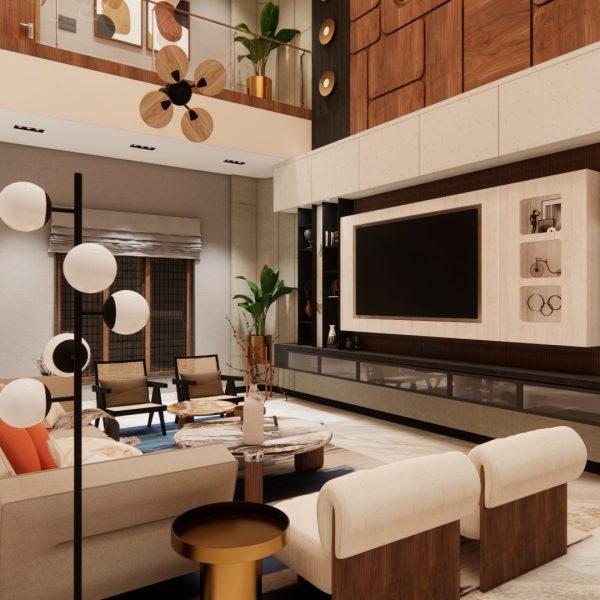
Most living rooms that don't work aren't badly decorated — they're designed around a generic idea of what a living room should look like instead of how a specific family actually uses it. A household that hosts often needs a different layout from one that mostly uses the room for a weeknight movie or a child's play space.
Start with how you'll use it
Before choosing a sofa, decide what the room is actually for day to day: television-centric evenings, conversation when guests visit, a work-from-home corner, or all three at different times. That answer decides where the seating faces, whether you need a large sectional or a few flexible pieces, and how much open floor you need to leave clear.
Seating and circulation
Leave enough space to walk between furniture without turning sideways — roughly 75–90 cm of clear path is a comfortable minimum. Modular or sectional seating is worth considering if the room needs to flex between a quiet weeknight layout and a larger gathering; it's easier to rearrange than a fixed three-piece set.
A focal point that isn't always the TV
A television dominating the room by default often flattens the space. An art wall, a textured accent wall, or a well-lit display shelf gives the eye somewhere else to land and makes the room feel considered rather than default. Framed traditional art — Warli panels, block prints, or family photography — adds character that a plain feature wall alone doesn't.
Layered lighting over a single ceiling light
A single central light source leaves a room feeling flat and slightly clinical after dark. Combining ambient ceiling lighting with a floor or table lamp and some accent lighting on art or shelving gives the room depth, and lets you dim the mood for a quiet evening without turning everything off.
Storage that stays out of sight
A console unit with closed storage, or a media unit with a mix of open and closed sections, keeps everyday clutter — remotes, chargers, kids' toys — out of view without needing a separate storage room. It's a small detail that has an outsized effect on how tidy a living room feels day to day.
None of this needs a full renovation to apply — even reworking the furniture layout and lighting in an existing living room can change how the space feels to actually spend time in.
Planning a project in Chennai, Kanchipuram or Bengaluru?
Tell us about it and our team will get back with a personalised quote.
Get A Quote